Red Light Therapy for Sore Knees: A Pickleballer's Guide to Faster Recovery.
Sore Knees, Big Dreams: How Red Light Therapy Can Keep Pickleballers in the Game
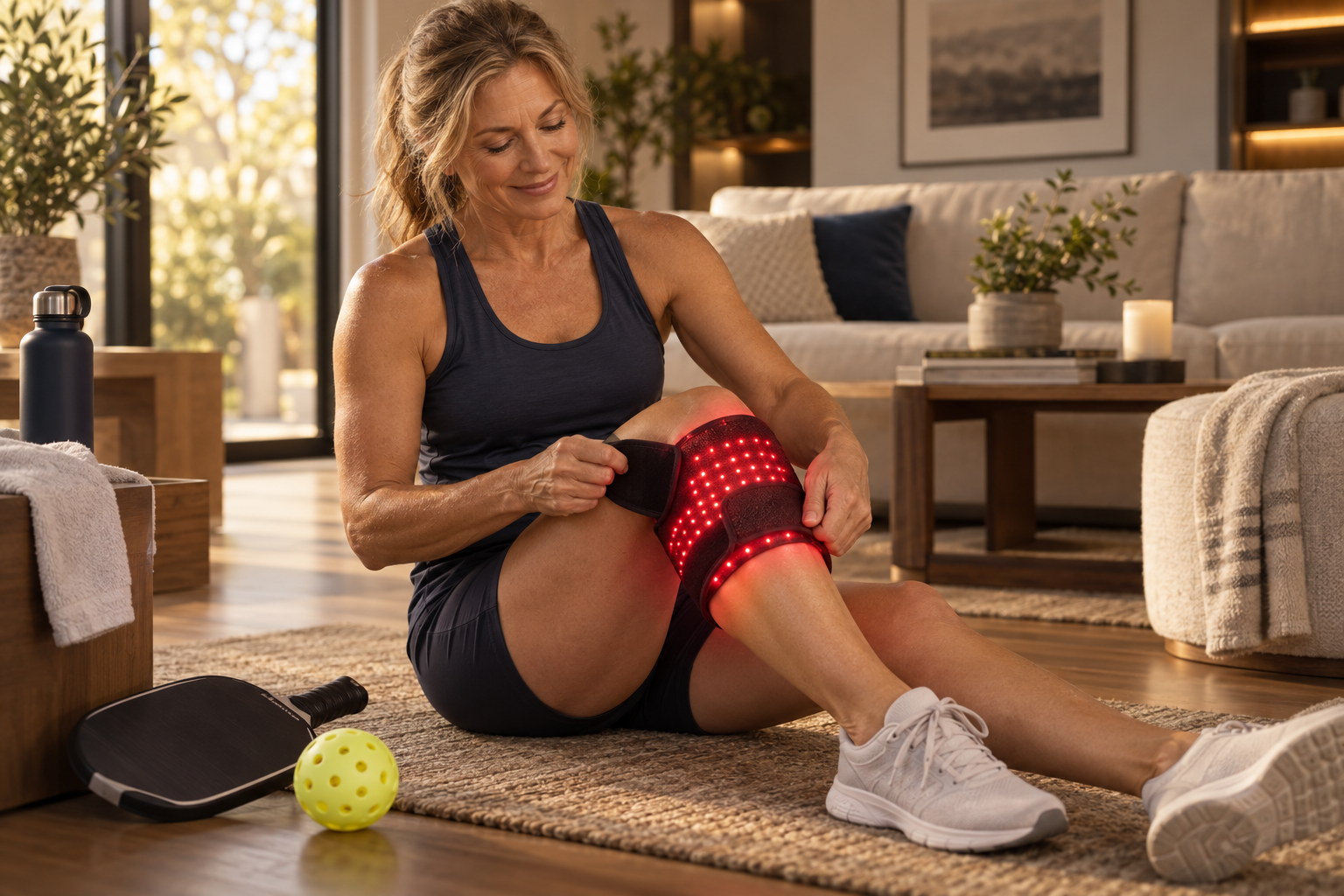
I'm a chiropractor, so I hear this a lot: "Doc, I was fine until I started playing pickleball."
Pickleball is a great sport. It's social, competitive, and addictive. It's also made of quick stops, sudden lunges, and sideways shuffles, which your knees do not remember agreeing to at 52. The "just one more game" you play at 8 a.m. can turn into stairs that feel like a negotiation by dinnertime.
The good news is that you don't have to choose between your knees and your Saturday doubles. Recovery has come a long way, and red light therapy is one tool that has earned a spot in a lot of players' routines.
What Is Red Light Therapy, Exactly?
Red light therapy, also called photobiomodulation, uses specific wavelengths of red and near-infrared light. The light is absorbed by your cells, especially the mitochondria, the "power plants" that produce energy. The idea is that giving your cells a little light-based support may help them do their repair work more efficiently.
It isn't a heat lamp, and it isn't magic. It's a non-invasive, drug-free, no-downtime tool. The research is still evolving, but it's promising enough that I'm comfortable recommending it as part of a smart recovery plan.
The Top 5 Benefits for Pickleballers' Knees
1. It may help ease joint soreness and stiffness
Post-match knee ache is the most common complaint I hear. Red and near-infrared light have been studied for their potential to reduce discomfort and stiffness in joints. Many players report that their knees feel looser and calmer after consistent sessions.
2. It may support circulation where you need it
Healthy blood flow brings oxygen and nutrients to tired tissue. Near-infrared light is thought to support local circulation, which is the delivery service your knees count on after a hard session.
3. It may help calm the inflammation that follows a long session
Some irritation after hard play is normal. Photobiomodulation is being studied for its role in helping the body manage inflammatory responses, so you can recover without reaching for the medicine cabinet first.
4. It may speed up recovery between games
This is the one that matters most for a tournament weekend. Supporting your cells' energy production may help muscles and connective tissue around the knee bounce back faster, so game three feels more like game one.
5. It's easy, so you'll actually do it
The best recovery tool is the one you use consistently. Red light therapy takes about 10 to 20 minutes. You can sit on the couch, catch up on your show, and strap a pad around your knee. No ice bath screaming required (though we have those too).
Why Wavelength and LED Layout Matter
Not every red light device is built the same. For knees, you want light that reaches deeper than the skin's surface.
- 635nm (red) works at the surface and supports skin and circulation.
- 830nm and 940nm (near-infrared) penetrate deeper toward muscle, tendon, and joint tissue.
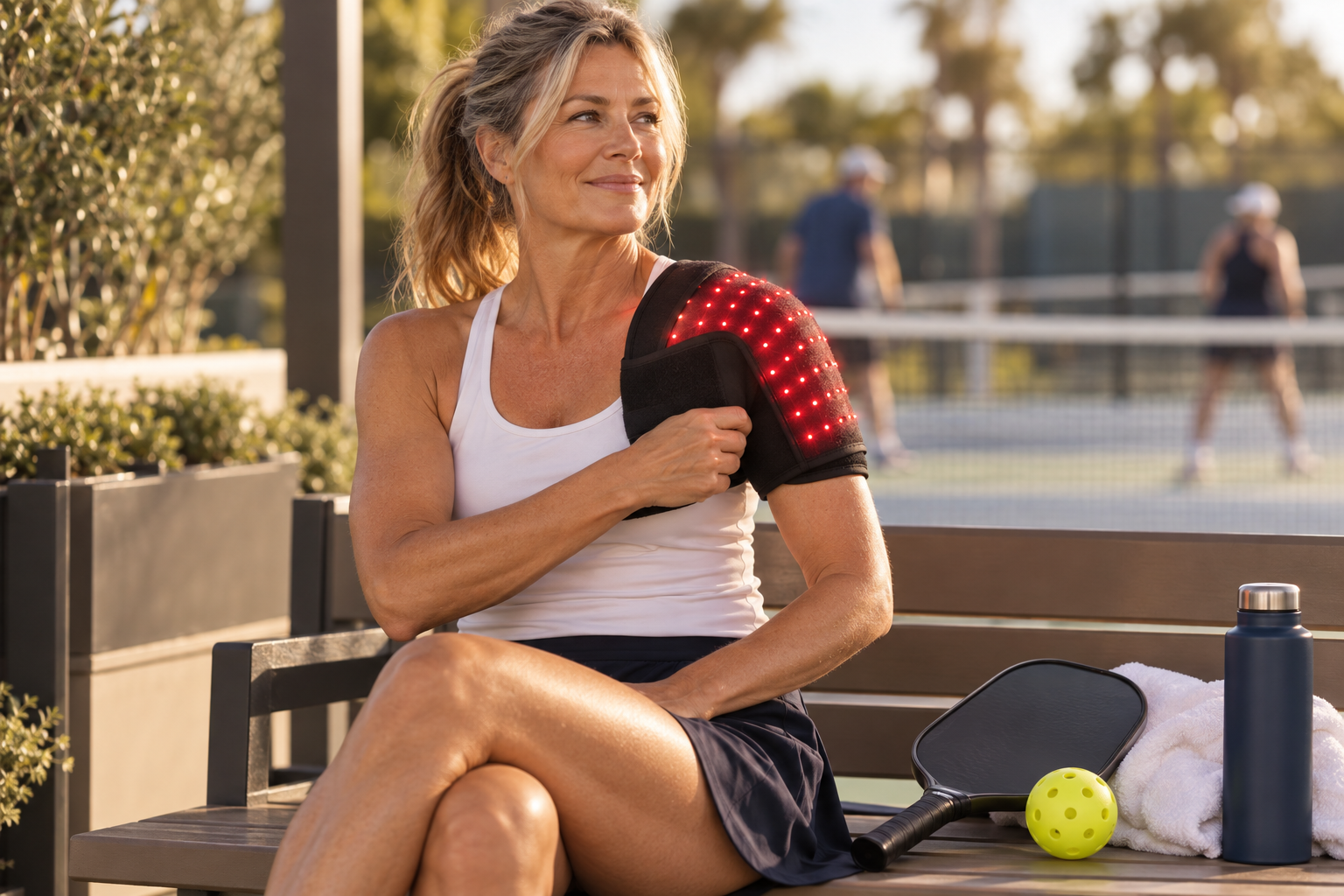
How the LEDs are arranged matters too. Some pads put red LEDs in one row and near-infrared in the next, which can leave coverage patchy. Our Lumara 3-in-1 pads place all three wavelengths at every LED location, spaced 5/8" apart for even coverage. Spaced closer, the LEDs build up heat and the power has to come down. Spaced wider, you get gaps. For a joint like the knee, even coverage is the point.
Doc's Game Plan for Pickleball Knees
- Warm up properly. Five minutes of dynamic movement beats walking straight onto the court.
- Use red light after play, or on rest days. Aim for consistency, typically a few times per week.
- Strengthen the support crew. Strong quads, hips, and glutes take the load off your knees.
- Get good shoes. Court shoes, not running shoes. Your knees will thank you.
- Listen to your body. Soreness is normal. Sharp pain, swelling, or instability is not.
The Bottom Line
You don't need to stop playing the game you love. You need a recovery routine that keeps up with how hard you play. Red light therapy is a simple, comfortable way to give your knees some support between matches.
Ready to get back on the court feeling better? Shop our Red Light Therapy collection and find the pad size that fits your knees, from compact 11" x 11" pads to full panels.
Disclaimer: This content is for general wellness and educational purposes only and is not intended to diagnose, treat, cure, or prevent any disease or condition. Red light therapy devices are not a substitute for professional medical advice. Consult your physician or healthcare provider before use, especially if you are pregnant, have a photosensitive condition, take photosensitizing medications, or have persistent knee pain, swelling, or instability.